


Teknik içeriğinizin devamı için hazırladığım profesyonel ve endüstriyel standartlara (ISO standartları terminolojisine) tam uyumlu İngilizce çeviriyi aşağıda bulabilirsiniz:
HEATING ZONE
A specific heating zone must be capable of removing moisture and heating the steel to the correct temperature. To achieve proper drying conditions prior to paint application, the recommended steel temperature should be between 30 °C and 40 °C, depending on the type and thickness of the coating.
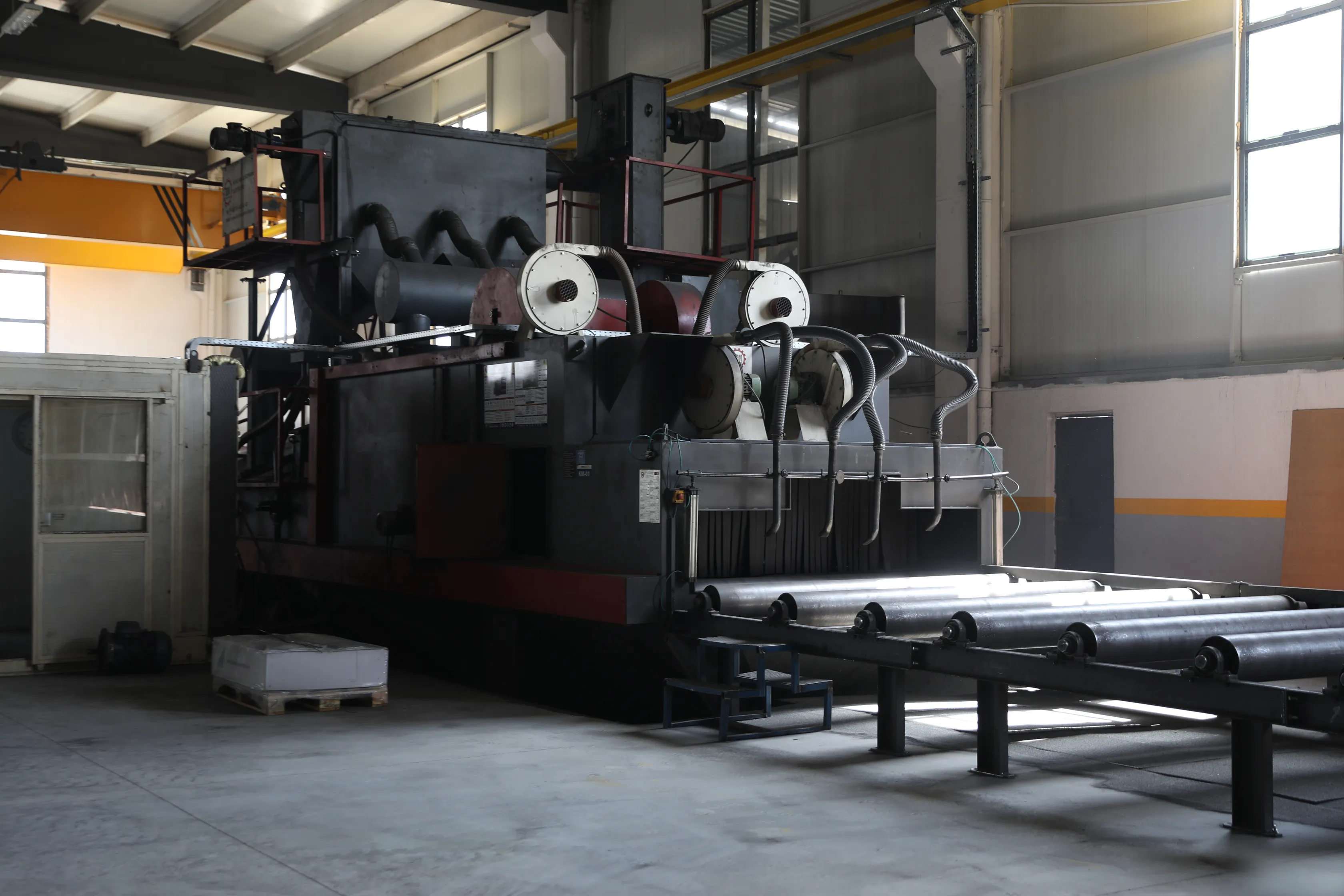
BLASTING UNIT
The blasting unit ensures the cleanliness of the steel (ISO 8501-1: 1988 Sa 2 ½ - Very thorough blast-cleaning) and creates the required roughness on its surface. There must be a cleaning unit integrated with the blasting unit. This unit is essential for removing dust and abrasive media (grit, shot) blasted onto the material surface.
STEEL CLEANLINESS
To achieve high-quality corrosion protection after shopprimer application, it is mandatory that the material to be painted undergoes Sa 2 ½ - Very thorough blast-cleaning. For Sa 2 ½ surface preparation, the surface must be free of oil, grease, and dirt, as well as mill scale, rust, paint coatings, and foreign matter.
SURFACE ROUGHNESS OF STEEL
The blast-cleaning unit will create a rough surface profile on the steel surfaces. This roughness depends on the type and size of the abrasive particles (such as grit, shot, etc.), as well as the impact velocity of these particles against the steel. This roughness creates an ideal anchor pattern for the paint, thereby increasing the adhesion rate of the coating to the material.
When viewed under magnification, the surface profile exhibits a wavy form consisting of peaks and valleys. For the painting process, the most suitable surface profile should have an $R_y$ height (the amplitude between peak and valley) of 40–75 µm.
SHOPPRIMER APPLICATION
The spray booth will feature a system where spray nozzles move back and forth. These nozzles move perpendicular to the feeding direction of the steel plates through the unit, coating the material using an overlapping method. This spray booth must have effective ventilation to eliminate dry spray (paint dust) and evaporated solvents.
In conjunction with the spray booth, there must be a separate area designated for spray pumps and paint mixing operations. This enclosed area requires a robust ventilation system to meet occupational health standards and prevent any fire hazards. This zone contains equipment that continuously agitates the paint within a tank to maintain its homogeneity.
DRYING AREA
The drying area must be spacious enough to ensure that the paint cures completely. To prevent solvents from causing air pollution in the workspace, this process must be carried out in an enclosed area.